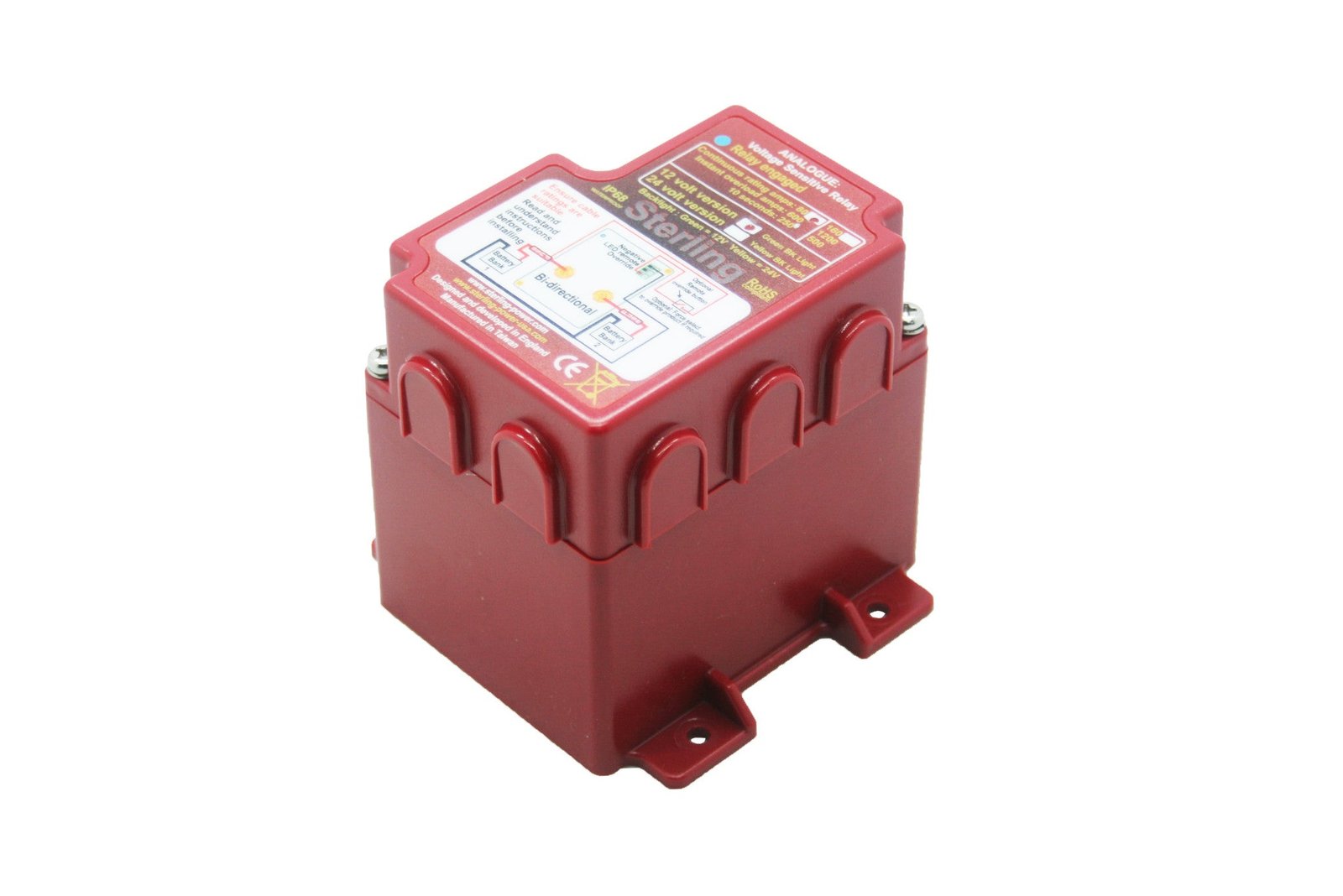
Latching Battery Isolator ELB (ELBs) upto 640A
Price range: 54.00 د.إ through 1,776.00 د.إ, excl. 5% VAT
ELB160-240A Instructions ELB480-640A Instructions Product Information PDF Electrical Battery Isolator Specifications: 12V model operates down to 8V, 24V models down to 16V Totally isolated switching voltage from control voltage All models are continuous current related Off power consumption = 0.000A On power consumption 1.5mA – 0.0015A LED consumption Switching power about 2A for 0.5 seconds Continuous Rating 5 Sec 30 Sec Starter Rated Size L x W x D mm Weight Kg Power Con Control Voltage Part N
Description
|
|
 ELB160-240A Instructions
 ELB480-640A Instructions
 Product Information PDF
Electrical Battery Isolator
Specifications:
| 12V model operates down to 8V, 24V models down to 16V | Totally isolated switching voltage from control voltage |
| All models are continuous current related | Off power consumption = 0.000A |
| On power consumption 1.5mA – 0.0015A LED consumption | Switching power about 2A for 0.5 seconds |
| Continuous Rating | 5 Sec | 30 Sec | Starter Rated | Size L x W x D mm | Weight Kg | Power Con | Control Voltage | Part Number |
| 160A | 1500A | 600A | Not suitable for engine start | 80 x 90 x 90 | 0.2 | 0A | 12V | ELB12160 |
| 160A | 1500A | 600A | Not suitable for engine start | 80 x 90 x 90 | 0.2 | 0A | 24V | ELB24160 |
| 240A | 2200A | 900A | Not suitable for engine start | 80 x 90 x 90 | 0.2 | 0A | 12V | ELB12240 |
| 240A | 2200A | 900A | Not suitable for engine start | 80 x 90 x 90 | 0.2 | 0A | 24V | ELB24240 |
| 480A | 4500A | 1800A | Lorry, diesel plant up to 600hp | 150 x 100 x 120 | 0.4 | 0A | 12V | ELB12480 |
| 480A | 4500A | 1800A | Lorry, diesel plant up to 600hp | 150 x 100 x 120 | 0.4 | 0A | 24V | ELB24480 |
| 640A | 6000A | 2400A | Lorry, diesel engines up to 1000hp | 150 x 100 x 120 | 0.4 | 0A | 12V | ELB12640 |
| 640A | 6000A | 2400A | Lorry, diesel engines up to 1000hp | 150 x 100 x 120 | 0.4 | 0A | 24V | ELB24640 |
| Extra momentary switch | (one supplied standard in each kit) | ELS1 | ||||||
| Key operated switch | With 2 Keys | (optional extra) | Please note only momentary keys can be used with this kit | ELKS1 |
Electrical battery isolators are used to switch the main pos or neg DC cables which are connected to a battery bank, the idea being to be able to isolate the battery bank remotely or automatically to preserve the charge in the battery bank or prevent a fire in an emergency situation, thus, ensuring that no drain takes place while the system is switched off. Isolators are commonly used on boats, camper vans and emergency vehicles or, in some cases, for emergency switching i.e. In a racing car it may be required to isolate the battery in the event of an accident.
The key features to look for in this type of device is the continuous rating of the product, its overload rating (i.e. if the engine start is being used through the device) making sure the product uses 0A when off and, when online, negligible amounts of power is consumed (Sterling uses a small amount of power to run an LED). There is only a small draw of about 2A for about 1/4 of a second during the crossover event.
This product comes complete with a remote spring load switch with an LED (on) remote and local indicator, which can be deactivated if power loss is a priority.
Large 8 mm (on smaller units) and 10 mm (on larger units) studs ensure good contact for electrical cables, with the product potted ensuring IP68 so the product can be mounted anywhere.
These are 12 or 24V, however, due to the low instantaneous power consumption of the switching mechanism you can tap the voltage from a higher voltage battery to use a lower rated product i.e. if you only have a 12V unit and a 24V battery bank then simply tap 12V off the 24V battery. If you have a 48V forklift then simply tap off 12V or 24V depending on the unit.
Isolated switching and control circuit:
The control circuit is totally isolated from the switching circuit, this is extremely important and means that the unit can switch on the negative or the positive of the battery. Also the battery it switches need not be the battery where the control voltage comes from. I.e. you could have a 12V control system with a 36V battery bank you wish to switch, this is not a problem.
Latching relay technology:
This is very important because along the control voltage is 8-32V to operate the switch, because such little power is used to operate the switch it can easily be used on up to 48V (and higher) systems. As you can simply tap off 12V to operate the control circuit without any fear of damaging a larger battery bank.
D+ alternator or ignition feed safety interlock circuit:
The biggest fear with an electrical battery switch ( as with a normal manual switch ) is that because it’s so easy to use then if someone switches off the switch with an engine running, this could cause massive damage to the engine and the alternator. The Sterling unit has an alternator D+ interlock which, if connected to the alternator’s d+/61 or other ignition feed stops the switch from working. I.e. if the engine is running the switch will not operate until the engine ignition is switched off or the alternator is powered down. This minimises the risk of any potentially expensive damages to the vehicle’s alternator or engine’s management system.
Multiple operational points:
This product is designed to be totally flexible with no real limitation as to how many points the product can be operated from, simply purchase more momentary switches if required.
Key lock optional: the unit comes with a momentary rocker switch to operate the unit, however, one can purchase a key lock option if required.
Rating: The products rating are their continuous rating i.e. full current all day, this can be used to calculate if the product is suitable for aux battery systems such as marine domestic battery banks or vehicle secondary battery banks. Simply ensure that the continuous load application does not exceed the rating of the product.
Cold cranking / engine start: This is a very hard aspect to rate a product for as there are so many factors. Most of which the operator would not be able to ascertain and, as such, we need to give rough guidance, these products have a very large overload rating, especially the 5 second rating (cold cranking). The 160A model would be on the edge for cold cranking but ideal for most auxiliary battery isolations, a small petrol engine such as a marine outboard would be okay but a diesel van may be too much, it is best to start at the 320A version if an engine start is required.
Other relevant products for isolating your engine and / or protecting your alternator is Sterling’s alternator protection device. This can be fitted to the engine’s alternator so that, in the event of accidental switching, the engine’s alternator will be protected.
Additional information
| Weight | N/A |
|---|---|
| Power Variant | 12V 160A ELB12160, 12V 240A ELB12240, 12V 480A ELB12480, 12V 640A ELB12640, 24V 160A ELB24160, 24V 240A ELB24240, 24V 480A ELB24480, 24V 640A ELB24640, Extra momentary switch ELS1, Key operated switch & 2 keys ELKS1 |
Related products
-

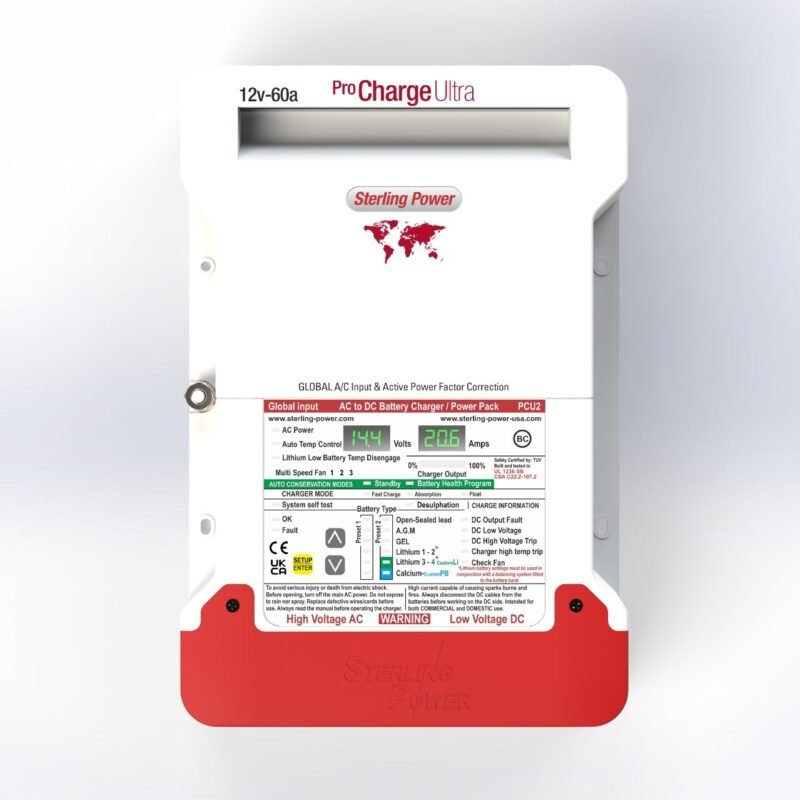
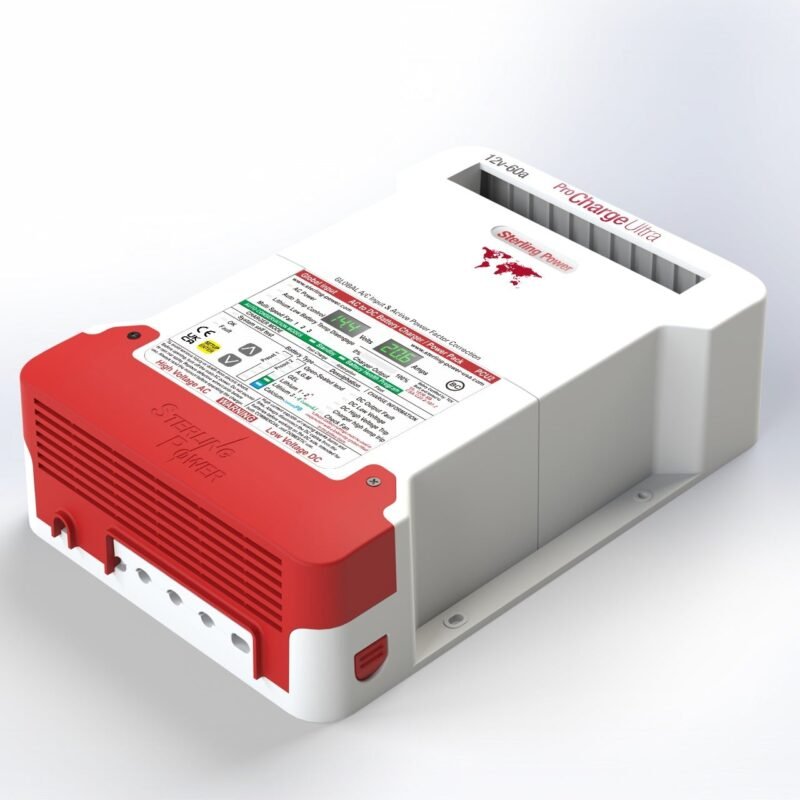
PRO CHARGE ULTRA
Price range: 1,445.90 د.إ through 2,643.85 د.إ, excl. 5% VATSelect options This product has multiple variants. The options may be chosen on the product page -
-
-
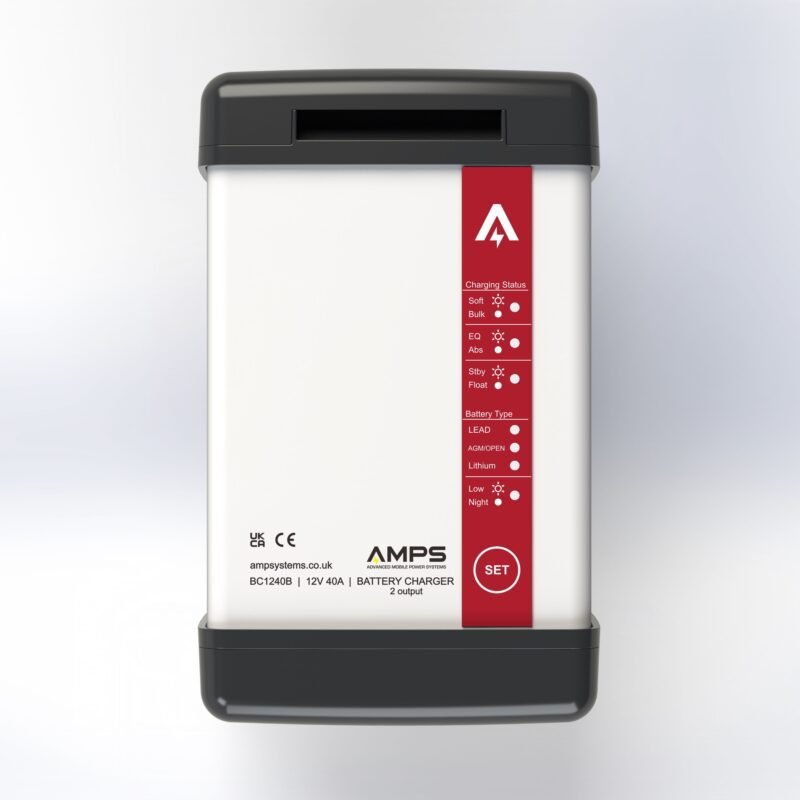
CLERANCE AMPS Battery Charger 12V / 24V 2 Output (6 Mth Warranty)
Price range: 724.00 د.إ through 996.00 د.إ, excl. 5% VATSelect options This product has multiple variants. The options may be chosen on the product page